
Matthew Hildebrandt
Marketing Director
5 Common DIY Catio Mistakes — From the Experts Who’ve Seen It All
Thinking DIY? Avoid these 5 catio mistakes to ensure your outdoor cat space is safe, sturdy, and built to last.
Written by Matthew Hildebrandt
5 Common Mistakes We See People Make When Building Their Own Catio
There’s something incredibly rewarding about creating a special outdoor space for your furry friend, a place where they can safely enjoy fresh air, sunshine, and the sounds of nature. With the rising popularity of catios, more and more cat parents are taking on the challenge of building their own. And we get it, it’s a fun project! Many people love the idea of saving money, flexing their DIY creativity, or simply taking pride in crafting something with their own hands for their furry family members.
But as heartwarming as that intention is, the reality is that building a catio isn’t as simple as it might appear on Pinterest. What starts as a weekend project can quickly turn into a maze of design flaws, structural challenges, and safety oversights. Even small mistakes — like choosing the wrong materials or underestimating how clever a determined cat can be — can make the difference between a fun, secure outdoor haven and a dangerous escape route.
At Cat Topia, we’ve designed and built thousands of custom catios across the country, each one tailored to fit a home’s layout and a cat’s unique personality. Along the way, we’ve seen plenty of DIY projects, some impressive, and others that needed major reworking to keep cats safe and happy. Our experience has given us a front-row seat to the most common pitfalls that cat parents face when tackling a catio build on their own.
Here are five of the most common mistakes we see people make when building their own catio, and how to avoid them.
Mistake #1 – Using Materials That Aren’t Safe or Durable
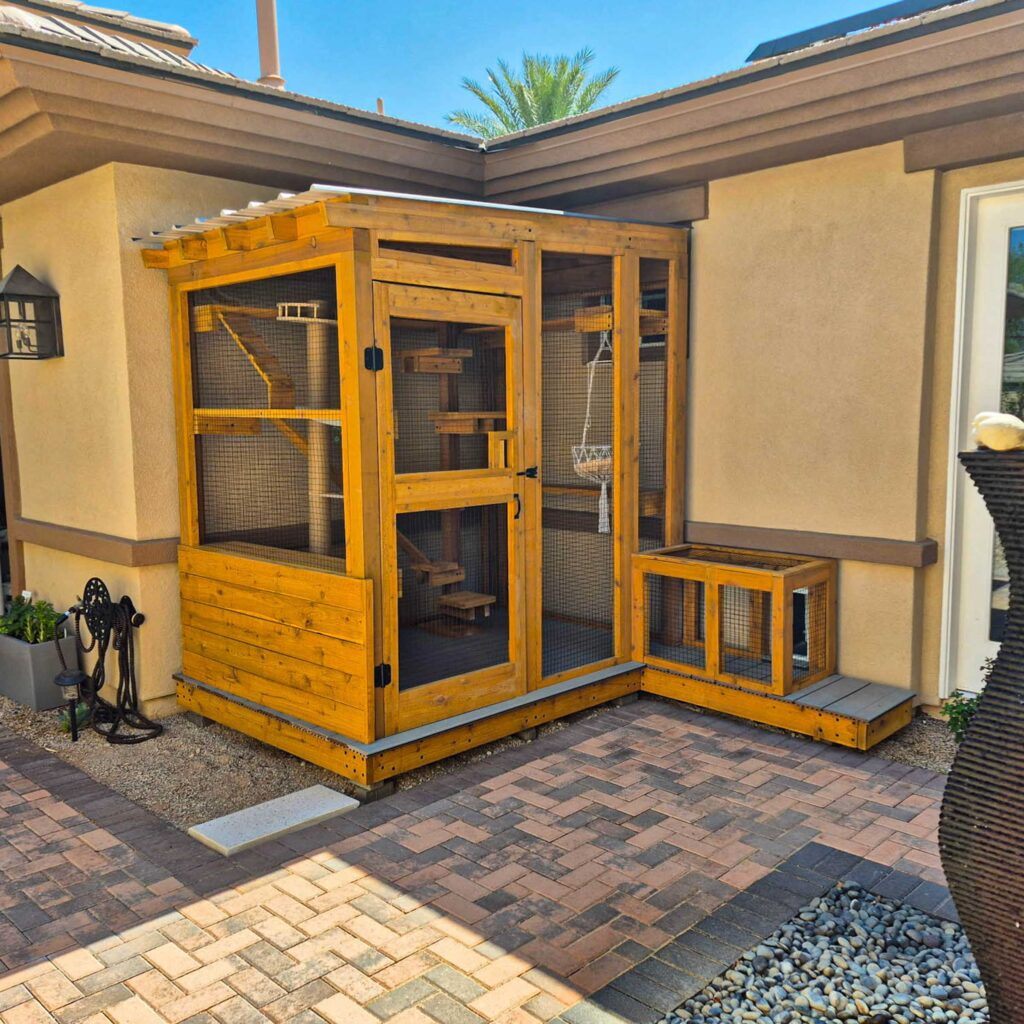
One of the most common pitfalls we see with DIY catios is choosing the wrong materials. It’s tempting to grab whatever wood or mesh is available at the local hardware store, especially when you’re excited to start building or trying to save money. But using cheap or indoor-grade materials can seriously compromise your catio’s safety and longevity.
When exposed to rain, sun, and snow, low-quality wood can warp, rot, or split in a matter of months. Thin wire mesh often rusts, weakens, or even bends under pressure, leaving gaps large enough for cats to escape or predators to squeeze through. We’ve even seen catios collapse after a single harsh winter simply because the materials weren’t built to last outdoors.
A catio should be both safe and durable, able to withstand weather and time while providing a secure, comfortable space for your cat. That starts with selecting the right materials, ones designed for outdoor use and animal safety. Check out our in depth guide on choosing the best catio material for a safe durable catio here.
Our Recommended Catio Materials:
- Cedar or Redwood – Naturally resistant to rot, weather, and insects. These woods not only hold up beautifully in outdoor conditions but also add a premium, finished look that complements any home or landscape.
- Polycarbonate Roofing Panels – Durable, lightweight, and UV-resistant, offering protection from rain while still allowing natural sunlight.
- Corrugated Metal Roofing – Long-lasting and exceptionally sturdy, great for areas with heavy rain, snow, or sun exposure.
- 1” x 1” PVC-Coated Critter Fencing – Strong, rust-resistant, and cat-safe. The PVC coating prevents sharp edges and provides years of durability against the elements.
Using quality materials isn’t just about aesthetics, it’s about safety, longevity, and peace of mind. The right wood, roofing, and screening can make all the difference between a catio that fails in a year and one that lasts for a multiple decades. Investing in these materials upfront ensures your cat’s outdoor sanctuary remains secure, beautiful, and built to withstand the test of time.
Mistake #2 – Ignoring Your Cat’s Natural Behavior
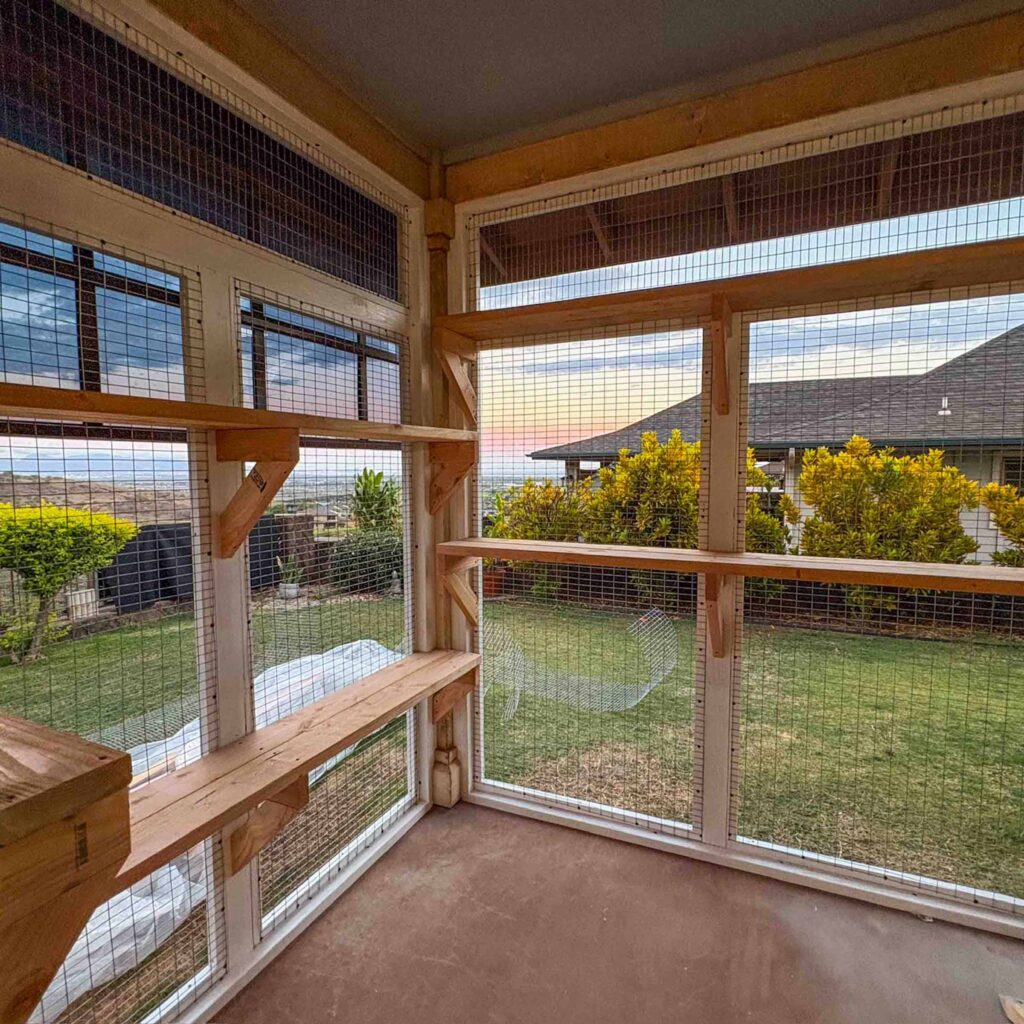
When designing a catio, think about how your cat interacts with their environment indoors, and then take that instinct outdoors. Cats need to climb, scratch, hide, and observe. A well-designed catio should give them the freedom to do all of those things safely and comfortably.
Instead of keeping everything at ground level, add vertical interest with shelving or platforms at different heights. This allows cats to move and explore naturally, while also giving them elevated spots to lounge and watch the world go by. Include cozy areas for resting and hiding, especially for timid cats who prefer a sense of security. For more adventurous felines, create elevated routes and lookout points where they can climb and perch high above the ground.
Adding simple enrichment features keeps the catio lively and engaging. Scratching posts, ramps, or even a few sturdy branches can provide stimulation and exercise. Every element should serve a purpose, to engage your cat’s curiosity, support their movement, and offer comfort year-round.
Here are a few features we recommend including in most catio designs:
- Multiple levels or platforms to encourage climbing and exploration.
- Safe ramp systems or gentle step-ups for older cats or smaller spaces.
- Scratching posts and textured surfaces to satisfy their natural scratching instincts.
- Enclosed cubbies or tunnels that provide shade and privacy.
- A mix of sunny and shaded spots so your cat can choose their comfort level.
- Durable, secure perches or towers for those cats who love a good view.
When your catio reflects your cat’s natural behaviors, it becomes more than an outdoor enclosure, it becomes a personal playground, a relaxation zone, and a safe space that truly enriches your cat’s daily life.
Mistake #3 – Poor Structural Planning and Stability
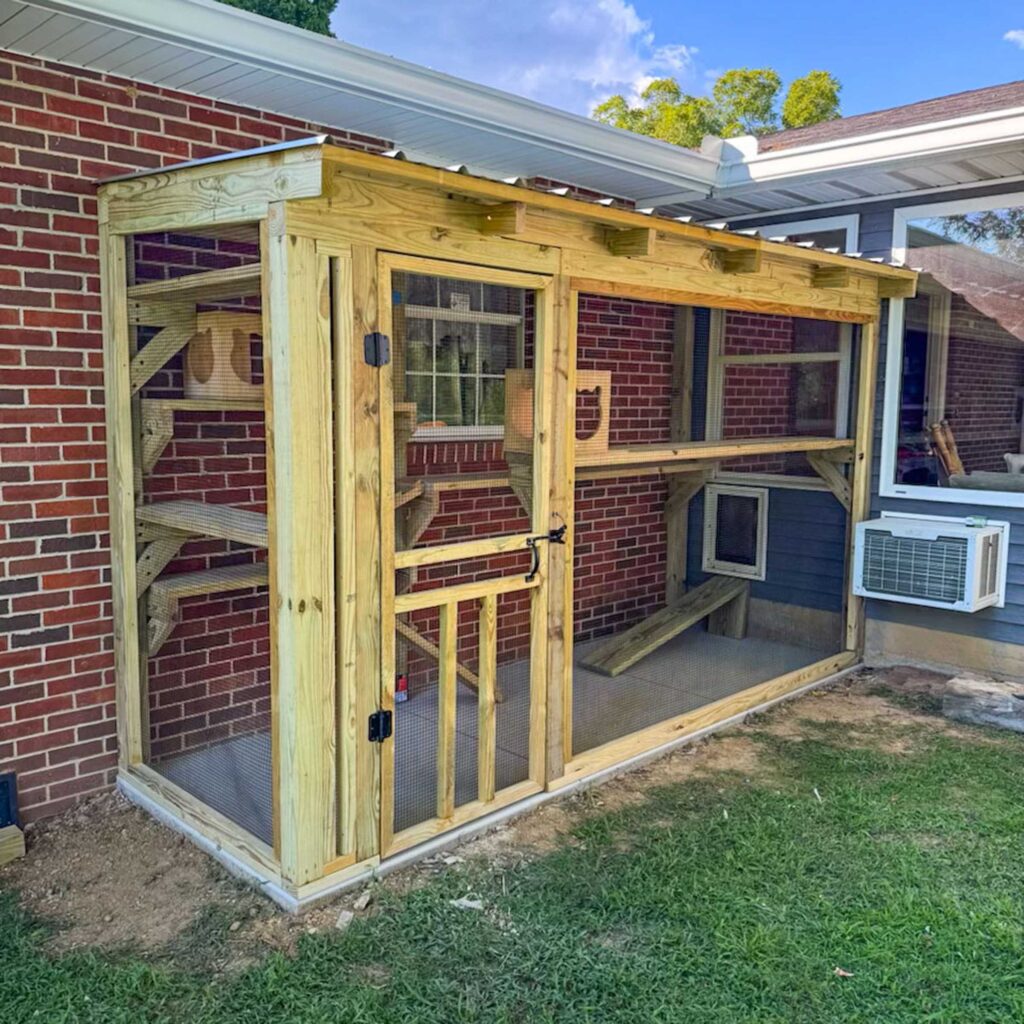
Many DIY catio projects start with excitement but no real plan. It’s easy to grab some lumber, mesh, and screws and begin building, but without a clear blueprint or understanding of basic structural principles, even the most creative designs can quickly turn unsafe. A catio isn’t just a simple box, it’s a structure that needs to handle weight, wind, weather, and time.
We’ve seen many DIY builds that look great at first glance but are not square, poorly anchored, or unstable in high winds. Some begin to lean or shift after just one season because the foundation wasn’t level or the frame wasn’t reinforced properly. Others are attached to the home in ways that compromise siding or allow water to seep in, causing rot or long-term damage.
This becomes even more critical with multi-level or roofed catios. The higher the structure, the more stress it places on each connection point. Without the right supports and load-bearing materials, a catio can become unstable, and even dangerous. That’s why every catio, no matter the size, should start with a solid plan that accounts for dimensions, weight distribution, and secure attachment points.
When planning a DIY catio, take your time to measure accurately, ensure the ground is level, and use hardware rated for outdoor use. If you’re unsure how to properly anchor the catio or reinforce the frame, it’s worth consulting a professional or referencing a proven design. A stable structure isn’t just about aesthetics, it’s about protecting your cat and preserving your investment for years to come.
Tips for Building a Safe and Stable Catio:
- Start with a plan. Sketch your design or use a scaled drawing before buying materials.
- Level the foundation. Whether it’s on a deck, patio, or yard, ensure your base is even before building upward.
- Reinforce corners and joints. Use brackets, braces, or gussets to strengthen key stress points.
- Secure your anchors. Attach the structure to the home or ground with outdoor-rated fasteners to prevent shifting.
- Plan for weight. If you’re adding shelves, towers, or a roof, make sure the framing can handle the load.
- Don’t be afraid to get help. When in doubt, professional builders can help you ensure your design is structurally sound and built to last.
Mistake #4 – Neglecting Weather Protection and Comfort
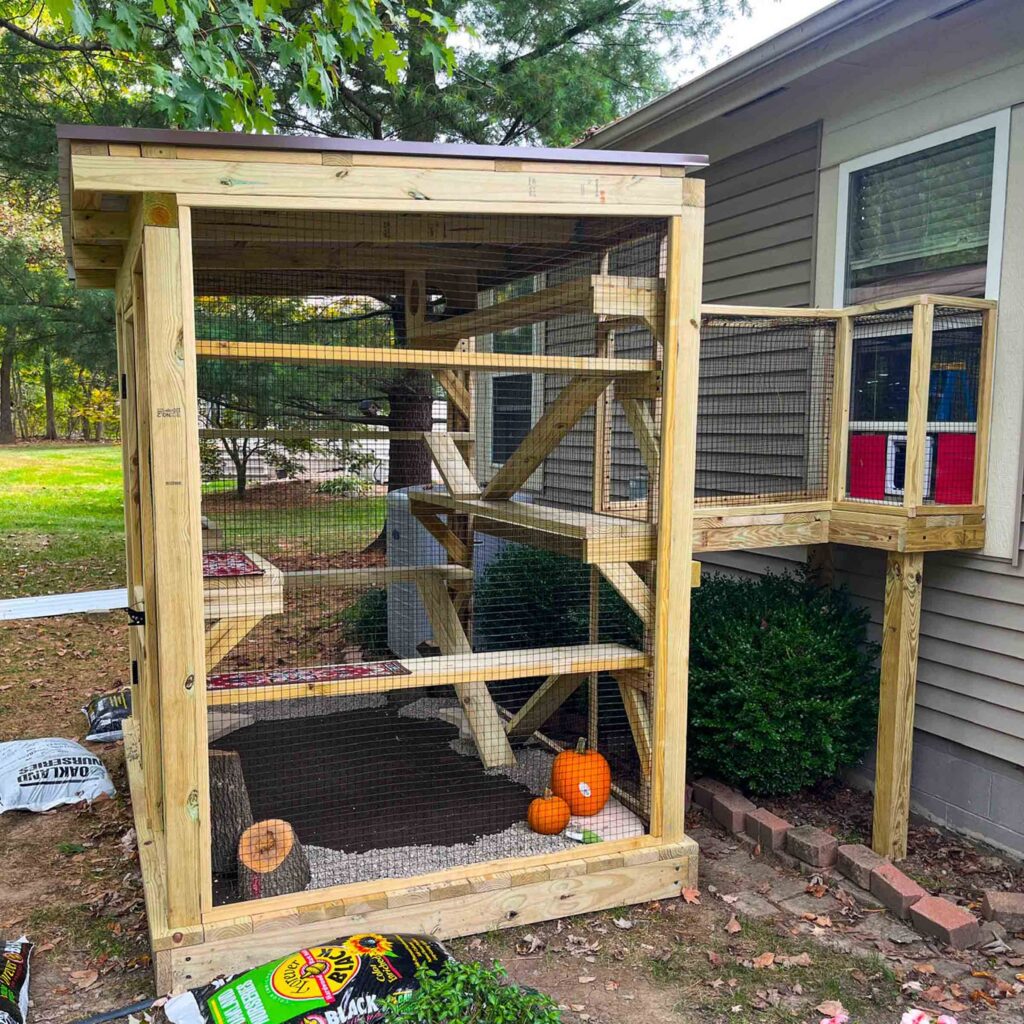
When people think about building a catio, they often focus on the fun parts, the design, the layout, and how their cat will explore it. But one of the biggest mistakes we see with DIY catios is forgetting to plan for year-round comfort. Your cat may have a fur coat, but that doesn’t mean they’re built for constant sun, rain, wind, or cold.
A well-built catio should be designed to protect your cat from the elements in every season. Too often, DIY builds are left fully open to the weather, no roof for shade, or flooring that traps moisture. Without weather protection, your catio can quickly become unusable for months at a time, turning a great idea into wasted effort.
Weatherproofing is about more than just keeping things dry; it’s about creating a comfortable space your cat can enjoy year-round. Proper roofing, drainage, and insulation extend both the catio’s life and your cat’s enjoyment of it.
Ways to Improve Weather Protection and Comfort:
- Add a Roof: Use polycarbonate panels for UV protection and natural light, or corrugated metal roofing for maximum durability and storm resistance.
- Plan for Drainage: Ensure the catio floor has proper runoff or a slight slope so water doesn’t pool or cause wood rot.
- Include Shelter Spaces: Create covered sections, cubbies, or insulated boxes where cats can retreat from heat, cold, or wind.
- Use Insulated Flooring: Add outdoor mats, weatherproof decking, or elevated platforms to keep paws dry and warm.
- Seal the Details: Weather-seal joints, edges, and attachment points to prevent leaks and extend the structure’s life.
- Think About Seasonal Comfort: Add shade cloths or removable panels in summer, and windbreaks or insulated covers in winter.
Make Your Catio Ready for All Four Seasons
Designing a catio for all four seasons ensures your cat can safely enjoy the outdoors no matter the temperature. During the hot summer months, focus on providing shade, airflow, and UV protection. In colder seasons, insulation, wind barriers, and cozy resting spots become essential. A truly functional catio adapts to every season keeping your cat comfortable year-round instead of shutting the space down for half the year.
For detailed ideas on preparing your enclosure for the cold months, check out our article on Catio Winter Upgrades. It covers insulation tips, heating options, and weatherproofing ideas that help your cat stay warm, safe, and happy all winter long.
Mistake #5 – Not Considering Long-Term Maintenance or Accessibility
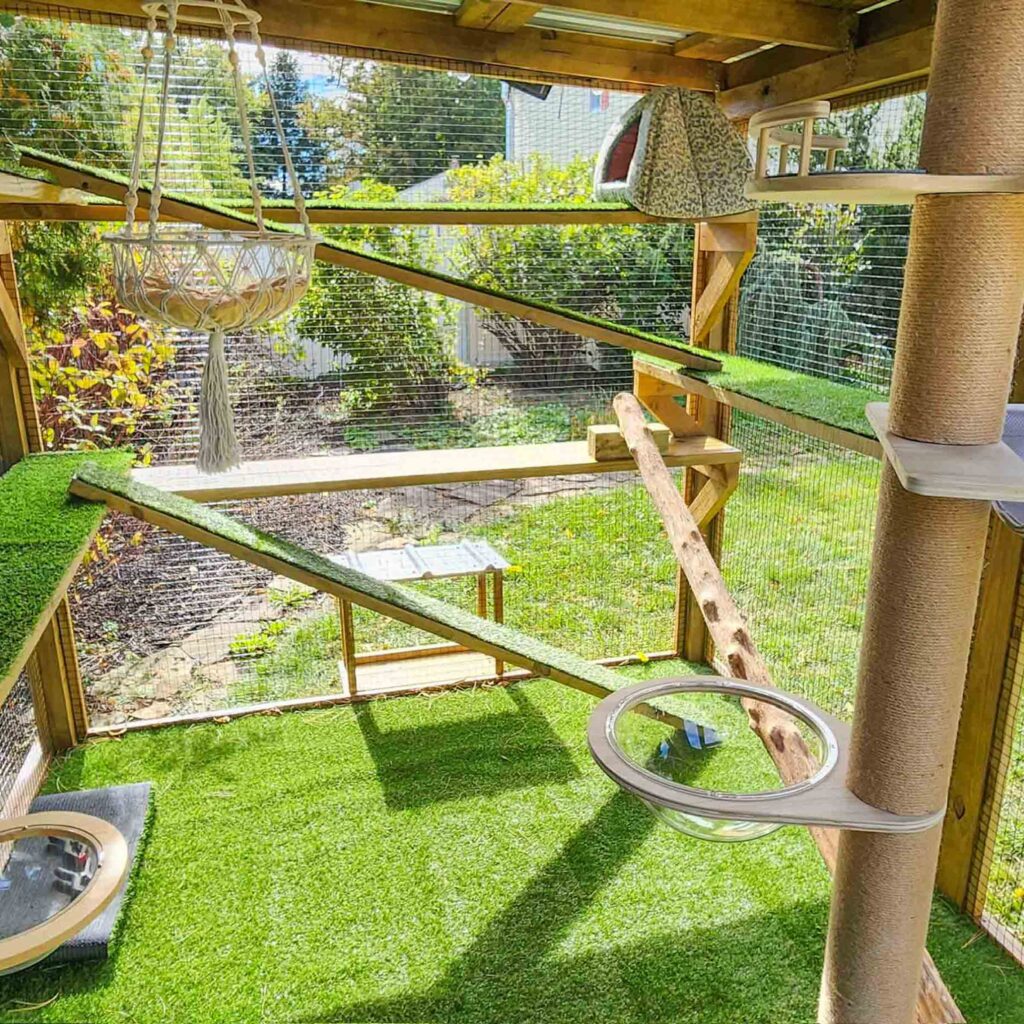
When people build a catio, they’re usually focused on the excitement of getting it finished, not what it’ll take to maintain it years down the road. But long-term maintenance and accessibility are two of the most overlooked parts of a DIY catio design. Even the best-looking build can become a headache if it’s hard to clean, repair, or reach when something needs attention.
We often see DIY catios built without adequate access points. Doors might be too small to fit a litter box or cleaning tools, or panels are permanently fixed in place, making it nearly impossible to reach certain areas. Over time, leaves, debris, and even pests can build up inside. When you can’t easily clean or inspect the structure, small issues, like rusting mesh, warping wood, or loose hardware, can quickly become major safety hazards.
The goal is to design a catio that not only looks great but also stands the test of time. That means thinking ahead about upkeep, repairs, and sustainability. Durable materials like cedar, redwood, and galvanized mesh reduce how often you’ll need to replace or repaint parts. But accessibility — doors, panels, and layout — determines how easy it’ll be to keep your catio safe, clean, and comfortable for years to come.
Tips for Designing a Low-Maintenance, Accessible Catio:
- Include wide access doors that allow you to enter with cleaning tools or replace interior features easily.
- Use removable panels or hinged sections so you can quickly inspect mesh or repair wood without dismantling the structure.
- Choose long-lasting materials like cedar, redwood, and PVC-coated wire that resist rot, rust, and wear.
- Elevate the floor or add drainage to prevent moisture buildup that leads to mold or wood damage.
- Inspect regularly — check for rust, loose screws, or warped panels at least once a season to catch small issues early.
- Plan for upgrades — design your catio so shelves, toys, or even roofing can be swapped out over time as your cat’s needs change.
The Bottom Line – Why Professional Design Matters
After seeing hundreds of DIY catio projects, we’ve learned that the five mistakes above — from weak materials to poor weather protection — all share one thing in common: they start with good intentions but end up creating unsafe, unstable, or unenjoyable spaces. Building a catio may seem simple, but it’s actually a blend of architecture, engineering, and feline psychology.
Even the most skilled DIYers can underestimate how complex it is to design a structure that’s secure, weather-resistant, and behaviorally enriching for cats. It’s not just about building an enclosure, it’s about creating a space that feels natural and stimulating while keeping your cat safe in every possible condition.
That’s where professional builders like Cat Topia come in. With over seven years of hands-on experience constructing catios across the country, our team understands what works, and what doesn’t. We account for critical details like load-bearing weight, material longevity, airflow, drainage, and feline behavior patterns that many DIY guides overlook. Every structure we design is built to last, blending safety, functionality, and beauty into one seamless outdoor retreat for cats.
We truly admire the DIY spirit. There’s something special about building something yourself, especially for a beloved pet. But when it comes to a space meant to protect and enrich your cat’s life, there’s no substitute for professional expertise.
And remember, don’t just hire any local contractor to build your catio. While many general builders mean well, most lack experience with feline behavior, enclosure safety, and the specialized design principles that catios require. In fact, we’ve seen countless “professionally built” catios that failed to meet even basic safety or durability standards. Before trusting a generic contractor, read our article on Why You Shouldn’t Hire a Local Contractor to Build Your Catio to learn why it pays to leave it to the pros.
Choosing a company that specializes in catio design and construction — like Cat Topia — gives you peace of mind knowing your cat’s outdoor sanctuary is built with precision, durability, and love.
Build the Catio Your Cat Deserves
We get it — building your own catio sounds exciting. The idea of creating something by hand for your cat is deeply rewarding. But when it comes to your cat’s safety, comfort, and long-term happiness, you can’t afford mistakes. Even small design errors can lead to unsafe conditions or limit how much your cat actually enjoys the space.
That’s why Cat Topia exists, to take the guesswork out of catio building. Our team combines expert craftsmanship, feline behavior understanding, and years of experience designing and building custom catios across the country. We focus on every detail — from structure and stability to comfort and aesthetics — so you can feel confident your cat’s enclosure is built to the highest standard.
A Cat Topia catio isn’t just a structure; it’s a sanctuary. It’s where your cat gets to watch birds safely, stretch in the sun, and feel the wind on their whiskers, all without risk. It’s where peace of mind meets pure joy.
The difference between a common mistake and a perfect catio is your cat’s safety. Let’s build something extraordinary, together.